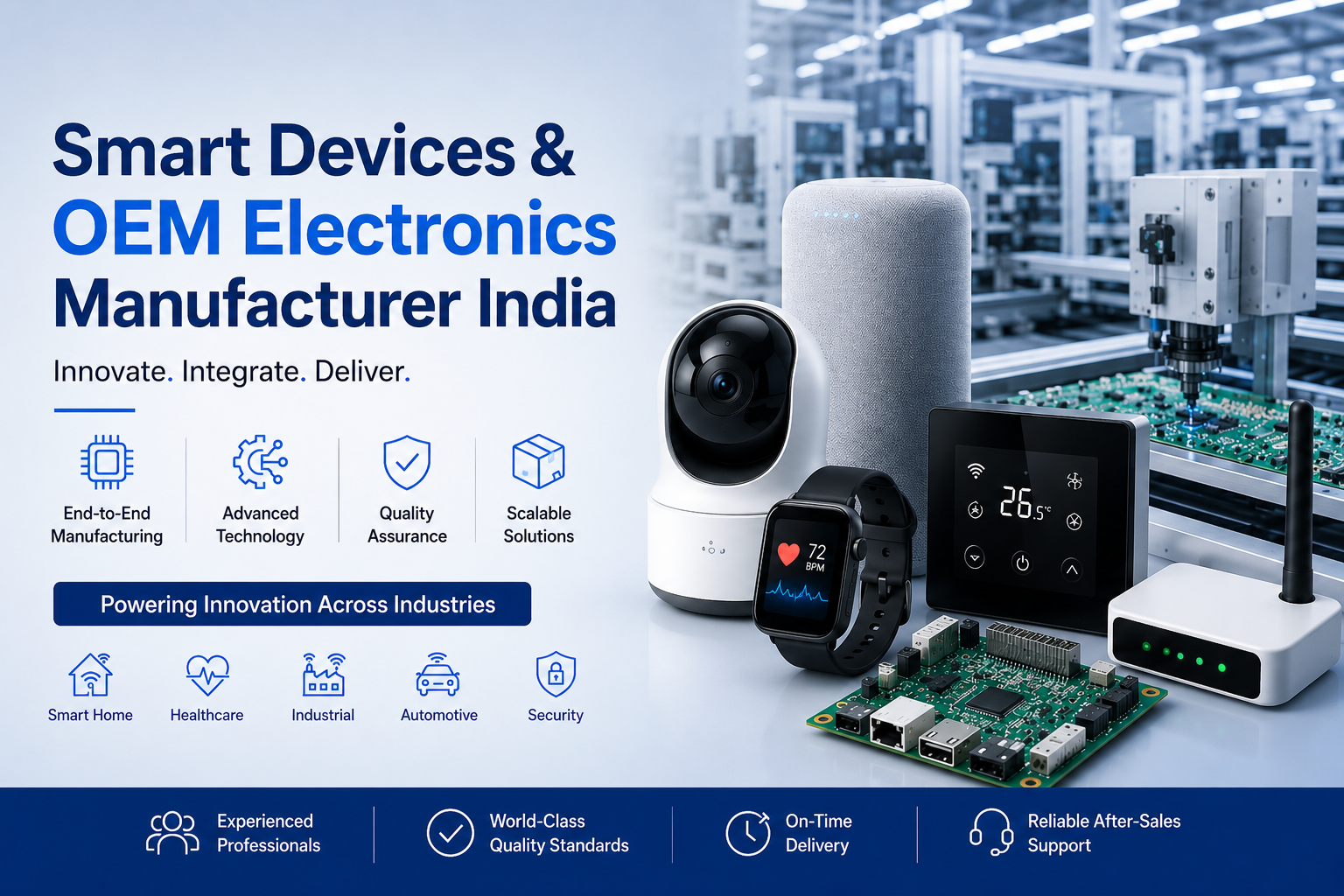
Behind every fitness band sitting on your wrist, every smart thermostat blinking on your wall, and every IoT sensor humming inside a factory floor there’s a quiet story most consumers never hear. The story of who actually built it. The names stamped on the box and the names that engineered, sourced, soldered, and shipped that product are rarely the same. And over the last decade, India has slipped into that second role with surprising speed.
If you’re a hardware founder trying to turn a working prototype into a shippable product, or a global brand de-risking your supply chain away from a single geography, your manufacturing partner is the single biggest variable in your timeline, your margins, and your defect rate. This listicle unpacks what really matters when shortlisting an OEM Electronics Manufacturer, and why the Smart Devices Manufacturer India landscape has earned the second look it’s getting.
1. Why India Has Become a Real Alternative for Electronics Production
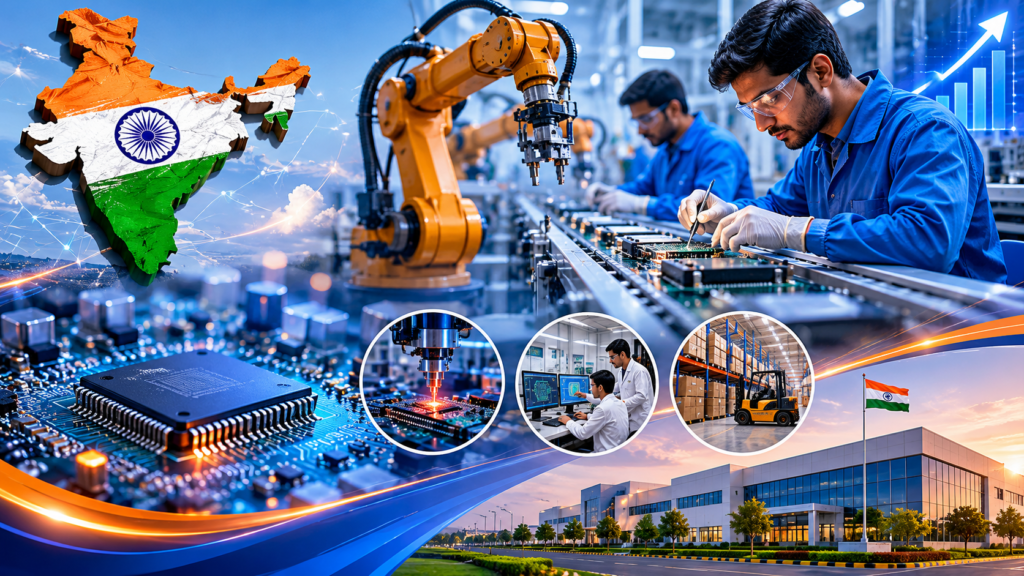
The shift didn’t happen overnight. A combination of PLI (Production Linked Incentive) schemes, a maturing component ecosystem in clusters like Noida, Bengaluru, Chennai, and Pune, and a deep bench of electronics engineers has turned India from a low-cost assembly destination into a genuine engineering-plus-manufacturing hub. Brands no longer come here only for cost they come for IP protection, English-language project management, and the ability to do small-batch prototyping that’s hard to justify at gigafactory scale.
For a Contract Electronics Manufacturer working in India, the value proposition is no longer “cheaper than China.” It’s “comparable quality, more flexible MOQs, and a friendlier IP regime” three things that genuinely move the needle for any serious brand.
2. What an OEM Electronics Manufacturer Actually Does
The label “OEM” gets thrown around loosely, but a real OEM Electronics Manufacturer takes ownership of far more than just the soldering iron. Their job is to absorb the manufacturing complexity so the brand can focus on the product and the market. Typical scope includes:
- Component sourcing across global suppliers with vetted alternatives for shortages
- PCB design review and DFM (Design for Manufacturability) feedback
- Tooling, jig creation, and test fixture development
- SMT and through-hole assembly, plus mechanical integration
- Firmware flashing, calibration, and end-of-line functional testing
- Regulatory testing support — BIS, CE, FCC, RoHS — depending on target geography
The good ones treat your BOM as a living document and flag obsolescence risks before they bite.

3. OEM, ODM, and Contract Manufacturing — Knowing the Difference
These three terms get blurred constantly, but the distinction directly affects who owns your IP, who carries inventory risk, and how fast you can iterate. Signing the wrong agreement type can quietly lock you into a relationship you can’t easily exit. The table below sketches the practical differences a buyer actually cares about.
| Model | Who owns the design? | Who handles sourcing? | Best suited for |
|---|---|---|---|
| OEM | The buyer (you) | Manufacturer | Brands with their own R&D and a finalized design |
| ODM | The manufacturer | Manufacturer | Brands wanting fast-to-market with white-label products |
| Contract / EMS | Buyer (mostly) | Shared or buyer | Mid-volume runs where design is locked and execution matters |
4. Categories of Smart Devices Being Built in India
The Smart Devices Manufacturer India ecosystem has matured well beyond the obvious phone-and-charger story. Today’s factories are turning out a broad mix of connected hardware, much of it engineered locally end-to-end:
- Consumer IoT — smart plugs, lighting, switches, doorbells, cameras
- Wearables — fitness bands, smartwatches, hearables
- Smart home appliances — connected ACs, geysers, air purifiers, robotic vacuums
- Health and wellness — BP monitors, pulse oximeters, glucometers
- Connected automotive — telematics units, EV chargers, fleet trackers
What unites these categories isn’t just the silicon inside it’s the firmware, cloud connectivity, and OTA update infrastructure that an experienced Industrial Electronics Manufacturer is expected to handle as part of the broader package.
5. How to Evaluate a Contract Electronics Manufacturer
Pricing is the seductive metric, but it’s almost never the one that should decide. When you’re vetting a Contract Electronics Manufacturer, dig considerably deeper than the quote sheet because the cheapest unit price often turns out to be the costliest partner once warranty failures and field returns start rolling in.
- Ask for line walkthroughs virtual or in person and watch how operators handle ESD, traceability, and rework
- Request DPPM (Defective Parts Per Million) numbers from comparable products, not aggregate factory averages
- Verify ISO 9001 and IPC-A-610 certifications, and ask which class they build to
- Check component traceability can they tell you the lot number of every chip in a unit shipped six months ago?
- Look at NPI (New Product Introduction) cadence a partner that takes 14 weeks for first article will slow your roadmap forever
6. Industrial vs Consumer Electronics — Why the Distinction Matters
Not all electronics manufacturing is the same beast. Build standards, testing regimens, and certifications diverge sharply depending on where your product ends up living. A factory comfortable with consumer-grade USB chargers may not be ready for equipment that has to survive ten years on a refinery wall or inside a switchgear cabinet.
| Dimension | Consumer Electronics | Industrial Electronics |
|---|---|---|
| Operating life expectation | 2–5 years | 7–15 years |
| Operating temperature range | 0°C to 50°C | -40°C to 85°C |
| Conformal coating | Rarely required | Often mandatory |
| Certifications | BIS, CE, FCC | UL, ATEX, IP67/IP68, ISO 13849 |
| Volume profile | High volume, short cycles | Lower volume, long cycles |
7. Red Flags Worth Walking Away From
Some warning signs show up before the first PO is even signed. The courtship phase is when you have the most leverage, so use it. Watch for these patterns during early conversations:
- Reluctance to share customer references or NDA-permitted case studies
- Vague answers on component sourcing strategy and second-source qualification
- Quotes that come in dramatically below the market usually a sign of corner-cutting on test or materials
- Missing or recently-acquired certifications without a clear audit trail
- Heavy reliance on a single key engineer whose departure would gut the program
A serious Industrial Electronics Manufacturer will welcome these questions, not deflect them.
Read Thsi Blog Also- Top 10 Electronics Manufacturing Companies in India
The Bottom Line
Choosing where and with whom you build your product is, in many ways, choosing your company’s future cost structure, defect curve, and ability to ship on time. India’s electronics ecosystem has matured into a place where that choice can be made on merit rather than compromise and the right partner is one that treats your roadmap like their own.
If you’re scouting for a manufacturing partner that brings end-to-end capability across smart devices, IoT, and industrial-grade builds, Formesmart is worth a conversation. With deep experience as an OEM Electronics Manufacturer serving both Indian and global brands, Formesmart pairs engineering depth with the operational discipline that keeps programs on schedule, on budget, and on spec.